That’s why many business owners take time to compare website design prices in Ireland. They’re not just looking for the cheapest deal; they want to understand what’s reasonable, what’s included, and whether the website will truly help their business grow.
In this guide, I’ll clearly explain website prices in Ireland, so you can get a realistic idea of what to expect, which factors affect the cost, and which type of website best fits your business.
What Does Website Design Cost in Ireland?
Simply put, website design in Ireland can cost anywhere from a few hundred to several thousand euros, depending on the kind of site you need.
There’s no set price because a website isn’t just one thing. A startup needing a small online presence has very different needs than a service business aiming for more enquiries or an online shop that requires product pages, payment setup, and categories.
Generally, the cost of building a website in Ireland depends on its size, design complexity, required content, included features, and whether it’s just to maintain an online presence or to actively generate business.
Typical price ranges for different types of websites
Basic starter website
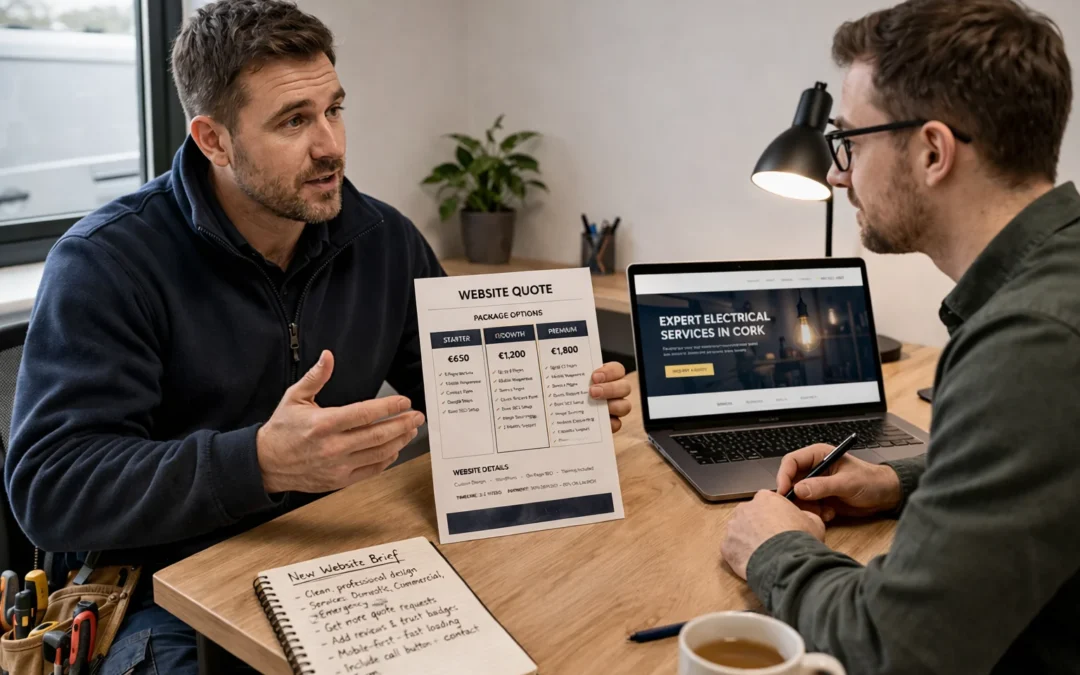
A basic starter website usually costs between €500 and €1,200. It’s a good fit for new or small businesses that want a clean, professional online presence without many extras.
Small business website
Small business websites typically cost between €1,200 and €2,500. They usually offer a polished layout, clear page structure, mobile-friendly design, and enough content to explain your services well.
Professional service website
For trades, consultants, solicitors, clinics, accountants, and other service providers, website prices usually range from €2,000 to over €4,000. These sites focus on building trust, credibility, and generating leads. For example, I built several HVAC, plumbing, and electrical websites within this category. Their main goal is to get leads. Without a website, it’s much more difficult to get leads, as you have nowhere to direct traffic or build landing pages.
eCommerce website
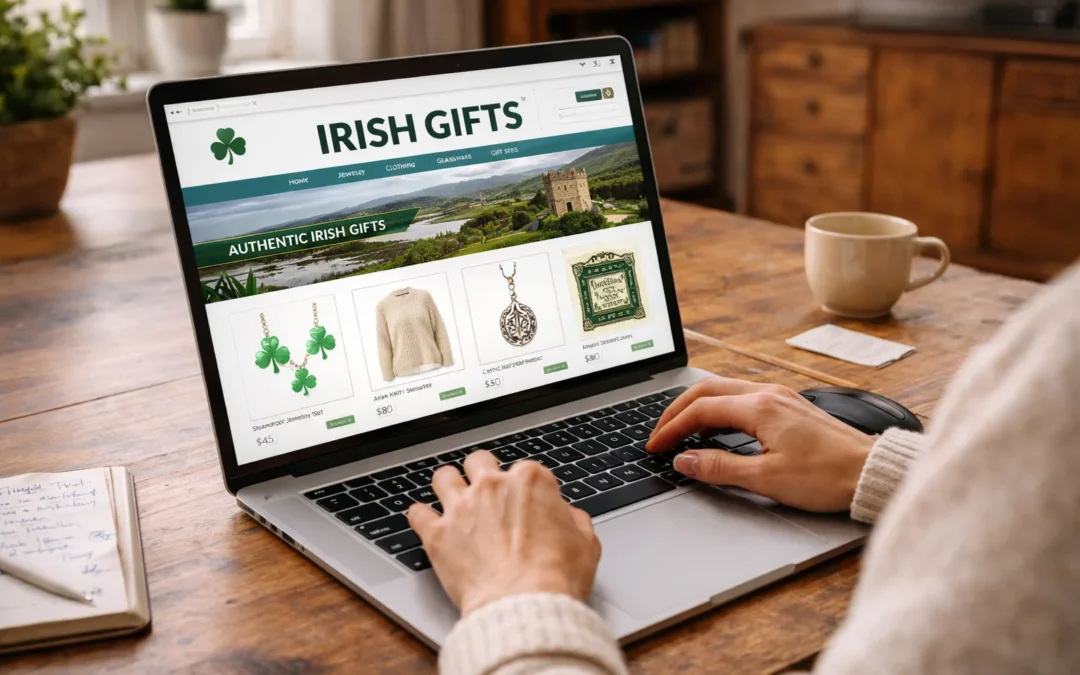
An eCommerce website in Ireland usually starts between €2,500 and €5,000 for a small store. Larger or more complex shops can cost much more, depending on product range and features.
Custom functionality website
If your website requires custom bookings, member areas, quote calculators, customer portals, advanced integrations, or other special features, the cost can easily go over €5,000.
What Affects Website Prices in Ireland?
There’s a good reason why quotes can differ so much between providers. Two websites might look similar, but the work involved can be very different.
The number of pages: More pages generally mean more planning, more design work, and more content. A simple five-page website is a very different job from a site with ten service pages, location pages, FAQs, and blog content.
Whether the design is custom or template-based: Template-based websites are usually faster and cheaper to build. Custom designs take more time but give you a site tailored to your business, brand, and goals, rather than fitting into a pre-made layout.
Content writing and imagery: Many business owners overlook this. Design is important, but content is what explains your offer, builds trust, and turns visitors into enquiries. Including copywriting, image sourcing, or custom visuals will affect the price.
SEO setup: Basic SEO setup should be included in any professional website. This covers proper page titles, meta descriptions, heading structure, internal links, image optimisation, and a site structure that search engines can easily read.
Contact forms, booking tools, or other features
Extra features also add to the cost. A basic contact form is simple, but booking systems, quote request forms, CRM integrations, chat tools, and custom enquiry features require more work.
eCommerce functionality
Online shops cost more because they involve more work. Setting up products, categories, checkout, payment gateways, shipping rules, customer emails, and stock management all need careful planning and testing.
Ongoing support and maintenance
Some quotes cover just design and build, while others include updates, backups, security, support, and post-launch website maintenance. It’s important to consider the full picture, not just the upfront cost.
Website Pricing for Small Businesses in Ireland
Most small businesses in Ireland don’t need a huge website with every feature. They need a site that looks trustworthy, clearly explains what they do, and gives customers a good reason to get in touch.
A common mistake is going too cheap and ending up with a poor-looking, underperforming site, or spending too much on features you don’t need. The best approach is to match the website to your business’s current stage while leaving room to grow.
Basic brochure-style websites
A brochure website is often enough for businesses that just need a strong online presence. This works well for many local businesses, tradespeople, beauty providers, consultants, and small service companies that want to look professional and make it easy for people to get in touch.
Lead generation websites for service businesses
For service businesses, the website should do more than just exist. It should help generate calls, quote requests, and enquiries. That means stronger calls to action, better trust signals, focused service pages, and a layout designed to convert visitors.
This is where spending a bit more often pays off. A lead-generation website that brings steady enquiries is much more valuable than a cheap site that just takes up space online.
More established business websites with stronger content and SEO
As your business grows, your website usually becomes a bigger part of your marketing. More content, local landing pages, stronger SEO, and a clearer structure may cost more but add long-term value.
How Much Should an eCommerce Website Cost?
eCommerce websites nearly always cost more than standard business websites, and that is completely normal.
Selling online is more than just having a good-looking site. Your website needs to support browsing, product discovery, build trust, handle checkout and payments, and work well on mobile. There are simply more moving parts.
What is included in eCommerce website pricing
A properly built eCommerce website should usually include:
Product pages
Category structure
Payment gateway setup
Shipping setup
Mobile usability
SEO foundations
These basics help an online shop work properly and give it a good chance to perform well in search results and turn visitors into customers.
Small online store vs larger custom eCommerce build
A small online store with a limited product range can often be built on a moderate budget. But when you add larger catalogues, product filters, variants, stock integration, custom shipping rules, or special features, costs can rise quickly.
That’s usually where the real difference is. A simple online shop is one thing, but a serious eCommerce website built for growth is something else.
Cheap Websites vs Professional Website Design
A low quote can be tempting when you want to keep costs down. But often, a cheap website ends up costing more over time because it needs to be rebuilt, fixed, or replaced sooner than expected.
What you usually get with a very cheap website
Very cheap websites often come with compromises such as poor design, weak copy, limited features, minimal SEO, and no real strategy. The site might be online, but that doesn’t mean it’s helping your business.
What a professionally built website should include
A professional website should be built around clear business goals. It should look credible, work well on mobile, load quickly, support conversions, and make it easy for people to contact you or make a purchase.
Why value matters more than the lowest quote
Many businesses only realize this later: the best website isn’t always the cheapest. It’s the one that gives you a strong online presence, builds trust, and turns visitors into leads or sales.
One-Off Website Costs vs Ongoing Monthly Costs
It’s important to know that building the website is just one part of the total cost.
Upfront design and development costs
This one-time cost covers planning, design, development, and website launch. Some packages also include content writing, basic SEO, and image sourcing.
Hosting, maintenance, and support
Most websites also incur ongoing costs such as hosting, domain renewal, security updates, backups, plugin licenses, and technical support.
SEO and marketing after launch
A website won’t bring traffic just by being live. If you want more visibility, enquiries, or sales, you’ll likely need ongoing SEO or digital marketing after launch.
Freelancer, Agency, or DIY Builder: Which Option Makes Sense?
There are a few different routes businesses in Ireland tend to take, and each one has its place.
Hiring a freelancer
A freelancer can be a good choice for smaller websites or businesses on a tighter budget. You might get more personal service and lower costs, but the outcome depends a lot on the freelancer’s experience and skills.
Working with an agency
An agency usually costs more but often offers a wider range of services. Design, development, SEO, content, and strategy are handled together, which can suit businesses that want their website to be a real growth tool.
Using Wix, Squarespace, or another DIY platform
DIY platforms can work well for very small startups or early projects. But for many businesses, they become limiting over time. A site that looks okay at first might not be enough when you need better SEO, performance, or flexibility later.
What Should Be Included in a Website Quote?
When comparing website quotes, it’s important to look beyond the price and see what’s actually included.
Design and page layout
You should find out how many pages are included, whether the design is custom or template-based, and how much design work is involved.
Mobile-friendly development
Mobile usability should be standard. A website that doesn’t work well on phones is already at a disadvantage before it even launches.
Basic SEO setup
At a minimum, the quote should cover basic SEO, such as page titles, meta descriptions, heading structure, image optimisation, and a clear site structure.
Forms, calls to action, and conversion elements.
A business website should encourage action. Contact forms, quote requests, call prompts, and strong calls to action all make a difference.
Training, updates, and support
It’s also worth checking whether you’ll be shown how to update the site and whether any support is included afterward. For example, here at Seller’s Bay, we provide training videos and a phone walkthrough as a minimum.
How to Choose the Right Website Package for Your Business
The right website package depends on your business type and what you want the website to do.
Best option for startups
Startups usually do best with a clean, credible starter website that gives a professional presence without making things too complicated too soon.
Best option for local service businesses
Local service businesses often benefit most from a lead-focused website that quickly builds trust, clearly explains services, and encourages enquiries.
Best option for eCommerce businesses
eCommerce businesses need a website that can manage products, categories, checkout, mobile users, and search visibility right from the start.
Best option for businesses focused on growth.
If growth is your priority, the website should be built as a long-term business asset. That means stronger content, better SEO, and a structure that supports future growth.
Is Website Design Worth the Investment?
In most cases, yes, it definitely is.
How a good website can pay for itself
A good website can generate more leads, build trust, and boost sales. Even a small increase in enquiries or conversions can easily pay for the investment over time.
The cost of having a poor website or no website at all
A poor website can quietly cost you business. People might leave without contacting you, trust can fall, and opportunities can be missed before you notice. For many businesses, this hidden cost is worse than the upfront cost of building the site right.
Final Thoughts on Website Design Prices in Ireland
The truth is, website design costs in Ireland depend on what your business really needs. A basic starter site, a lead generation website, and a full eCommerce build are very different projects, so it’s natural that prices vary.
The key is to look beyond the cheapest quote and focus on what the website should do for your business. If it’s meant to build trust, generate enquiries, support sales, and help you grow, then value matters more than just the lowest price.
If you’re comparing website design prices in Ireland, start by being clear about your goals. Once you know what the website needs to do, it’s easier to pick the right investment and avoid paying too little for the wrong site or too much for features you don’t need.
For businesses wanting a website that looks professional, works well, and supports long-term growth, it’s usually best to see the website as an asset, not just another expense.
Frequently Asked Questions
How much does a basic website cost in Ireland?
A basic website in Ireland will often cost between €500 and €1,200, depending on the number of pages, design quality, and what is included.
What are typical website design prices in Ireland?
Typical website design prices in Ireland range from a few hundred euros for a simple brochure site to several thousand euros for a more advanced business website or online shop.
Why do website quotes vary so much?
Website quotes vary because the level of work can differ significantly. One quote may cover only design and build, while another includes content, SEO, support, and strategy.
How much does an eCommerce website cost?
A small eCommerce website may start at around €2,500, while larger or more custom online stores can cost significantly more, depending on the number of products and required functionality.
Do I need to pay monthly for a website?
Usually, yes. Even if the website is built for a one-off fee, there are often ongoing costs such as hosting, maintenance, updates, licences, and domain renewal.
Is it better to hire a freelancer or an agency?
That depends on the project’s size and what you need. A freelancer can suit smaller budgets and simpler websites, while an agency may be the better option if you want a more complete service.
If you’re planning a new website and want a clearer idea of what your business really needs, it’s important to look beyond just the upfront cost. The right website should fit your goals, budget, and where your business is now. At Selles Bay, we focus on building websites that not only look professional but also build trust, generate enquiries, and support long-term growth.
Don’t forget to visit our learning centre for lots of articles to help you with your online business.
Ireland has a unique mix of businesses. The cities and surrounding areas are home to major companies such as Google, Amazon, independent retailers, tradespeople, cafés, professional service providers, tourism businesses, and family-run companies that have operated for generations.
Many of these businesses rely on a combination of local reputation and repeat customers. While that foundation is valuable, consumer behaviour has changed dramatically in recent years.
Today, most people research businesses online before making contact.
Visitors travelling from Dublin or overseas often search online before they arrive in the city. Local residents regularly use Google Maps to compare nearby businesses. Even long-established companies now find themselves competing with newer businesses that simply have a stronger digital presence.
Working with businesses across the nation, a few patterns appear again and again:
Customers frequently choose businesses directly from Google Maps
Visitors research restaurants, shops, and services before visiting your region
Newer companies sometimes outrank long-established businesses due to better websites
Many local websites are slow, outdated, or difficult to use on mobile devices
In practical terms, this means that businesses with strong websites and good local SEO are often capturing the majority of online enquiries.
Step 1: Build a High-Performance Website
Your website serves as the central hub of your online presence. Whether someone finds your business through Google, social media, advertising, or a recommendation, they will almost always visit your website before deciding whether to contact you.
A good website doesn’t need to be overly complicated or expensive. However, it must be designed properly so that visitors can quickly understand what your business offers and how to get in touch.
For local businesses in Ireland, a high-performing website should clearly communicate:
What services or products do you offer
Where you operate
Why customers should trust your business
How can people contact you quickly
Many businesses find that upgrading their website is the single most effective improvement they can make to their online marketing. A professionally designed site that loads quickly, looks modern, and clearly explains your services can significantly increase enquiries.
Businesses looking to improve their site structure and performance can learn more about professional web design services in Ireland and how a properly built website supports long-term online growth.
Fast Website Loading Speed
Website speed plays a major role in both search rankings and customer behaviour.
When a website loads slowly, visitors often leave before they even read the content. This is especially true for mobile users, who expect websites to load almost instantly.
Research from Google shows that slow websites lead to significantly higher bounce rates and lower conversions. You can explore more about this behaviour in Google’s research on page performance and user experience from Think with Google.
For local Irish businesses, improving website speed can have a noticeable impact on results. Faster websites tend to:
Rank higher in Google search results
Keep visitors on the page longer
Improve customer trust and credibility
Increase enquiries and sales
Speed improvements often come from optimising images, improving hosting performance, and removing unnecessary website scripts.
Mobile-First Website Design
Most local searches now happen on mobile phones.
People searching for businesses often want quick answers rather than long browsing sessions. They might be checking opening hours, looking for directions, or comparing services between nearby companies.
A mobile-first website ensures that visitors can easily navigate the site on smaller screens. This means:
Text is easy to read without zooming
Buttons are large enough to tap easily
Navigation menus are simple and clear
Important information appears quickly
If a website is difficult to use on mobile devices, many visitors will simply leave and choose a competitor.
Clear Local Service Areas
Another common issue with local websites is that they don’t clearly communicate where the business operates.
Search engines rely on location signals to match businesses with relevant searches. If your website clearly states that you serve areas like Dublin City, Tramore, Dunmore East, or Dungarvan, Google can better understand who your business serves.
Many companies benefit from creating location-specific service pages. These pages allow you to explain your services in each area while also increasing your chances of appearing in local search results.
Clear service areas help both customers and search engines understand your reach.
Strong Trust Signals
When someone visits your website for the first time, they quickly try to determine whether your business is trustworthy.
Trust signals help answer that question.
Examples include:
Customer testimonials
Photos of real work
Case studies
Certifications or professional memberships
Clear contact information
Local photos and examples can be particularly effective. Showing work completed in your local region or highlighting local customers helps reinforce your business’s authenticity.
Trust signals play a significant role in converting website visitors into actual customers.
Step 2: Strengthen Your Local SEO Foundation
Local SEO ensures that people searching for services in your region can easily find your business online.
When done correctly, local SEO helps your company appear in Google search results, Google Maps listings, and location-based searches.
The three main areas to focus on are Google Business Profile optimisation, on-page SEO improvements, and local directory citations, which are in your niche.
Google Business Profile Optimisation
Your Google Business Profile is often the first thing potential customers see when they search for your business.
A well-optimised profile can generate a steady stream of phone calls, website visits, and enquiries.
Important optimisation steps include:
Adding high-quality photos of your business
Writing a detailed business description
Using a local Irish phone number
Keeping the opening hours accurate
Encouraging customers to leave reviews
Businesses that regularly update their profile and collect reviews often outperform competitors that neglect their listing.
On-Page Local SEO
On-page SEO refers to the improvements made directly on your website to help search engines understand your business.
Important elements include:
Location-based keywords
Clear page titles and headings
Structured data (schema markup)
Dedicated pages for core services
Internal linking between relevant pages
These small improvements help search engines identify what your business does and where you operate.
Irish Directory Listings (Citations)
Directory listings help search engines confirm that your business information is accurate.
Common directories for Irish businesses include:
Your Local Chamber
Golden Pages
Bing Places
BusinessPosts.ie
Facebook Business Pages
Apple Business Connect
Consistency is extremely important. Your business name, address, and phone number should match exactly across every listing.
These signals help build trust with search engines and improve local rankings.
Step 3: Use Advertising Strategically
Organic marketing strategies like SEO build long-term visibility, but paid advertising can help businesses generate immediate traffic.
For many local businesses, combining SEO with targeted advertising creates the best results.
Google Ads for High-Intent Searches
Google Ads allow businesses to appear at the top of search results when people search for specific services.
This works particularly well for industries where customers are actively looking for help, such as trades, repairs, or professional services.
Someone searching for terms like:
plumber Waterford
electrician near me
accountant Dublin
is usually ready to contact a business quickly.
If your business is located in a smaller city, such as Waterford, a smaller market than Dublin or Cork, advertising costs are often lower. This means businesses can generate leads without needing a massive budget.
Facebook and Instagram Advertising
While Google Ads capture people actively searching for services, social media ads allow businesses to reach potential customers based on interests, demographics, and location.
This makes them particularly effective for businesses that benefit from visual marketing or local awareness.
Industries that often perform well include:
cafés and restaurants
salons and beauty services
gyms and fitness studios
local retailers
events and promotions
These platforms allow extremely precise location targeting, meaning businesses can show ads only to people living in areas such as Dublin, Waterford, or even smaller regions like Finglas East.
Step 4: Build a Simple Content Strategy
Content marketing helps businesses improve their search rankings while also building trust with potential customers.
Many small businesses assume content marketing requires constant publishing, but even occasional high-quality content can have a significant impact.
Examples of useful content include:
blog posts answering common customer questions
local guides related to your services
case studies from local clients
before-and-after project examples
tutorials or helpful advice articles
This type of content helps search engines recognise your website as a valuable resource while also giving potential customers confidence in your expertise.
Step 5: Use AI Tools to Improve Efficiency
Artificial intelligence tools are increasingly useful for businesses that want to streamline their marketing.
AI can help with a variety of everyday tasks, including:
generating blog outlines
improving website copy
writing product descriptions
creating social media posts
brainstorming marketing ideas
For businesses running online stores, using structured AI workflows can dramatically reduce the time required to manage products and content. Companies managing large product catalogues often benefit from professional ecommerce management services in Ireland that help streamline updates, optimisation, and product management.
AI tools should always be used thoughtfully. Content should still be reviewed and edited to ensure it accurately represents your brand and expertise.
Step 6: Convert Website Visitors into Customers
Attracting visitors to your website is only part of the process. Once someone arrives on your site, it should be easy for them to take action.
Many businesses lose potential customers simply because their websites don’t provide clear next steps.
Effective conversion elements include:
click-to-call buttons
short contact forms
live chat tools
online booking systems
strong calls-to-action
Irish customers tend to value responsiveness. Businesses that reply quickly to enquiries often win customers even when competitors are larger or more established.
Real Examples from Irish Businesses
Small improvements to digital marketing often produce meaningful results.
For example, local businesses frequently experience growth after implementing relatively simple changes such as:
improving their Google Business Profile with updated photos and reviews
launching a basic one-page website with clear service descriptions
running small but targeted advertising campaigns
improving their website’s speed and mobile usability
These improvements help businesses appear more professional and easier to contact, which directly increases enquiries.
Common Mistakes Irish Businesses Make
Many local businesses struggle online because they unknowingly repeat the same mistakes.
Some of the most common issues include:
relying only on Facebook for visibility
neglecting their Google Business Profile
operating outdated or slow websites
failing to track analytics or performance data
ignoring website maintenance and security updates
Avoiding these problems already puts businesses ahead of many competitors in the region.
A Simple 90-Day Plan for Online Growth
Businesses that want to improve their online presence often benefit from focusing on small, achievable improvements over a short time period.
Month 1
Update or rebuild your website, improve your Google Business Profile, and ensure your basic SEO foundations are in place.
Month 2
Publish helpful content, begin collecting customer reviews, and experiment with small Google or social media advertising campaigns.
Month 3
Analyse what is working, improve high-performing pages, and continue building trust signals such as testimonials and case studies.
Following a structured plan like this allows businesses to steadily improve their online visibility without feeling overwhelmed.
Final Thoughts
Ireland is home to a large number of talented entrepreneurs, skilled tradespeople, and independent businesses.
Many of these companies already deliver excellent products and services locally. The challenge is simply ensuring that customers can find them online.
By investing time in the fundamentals — a strong website, effective local SEO, useful content, and clear conversion pathways — businesses can dramatically increase their visibility.
Companies that take these steps today will position themselves strongly for the future as more customers rely on online search to find local services.
If you’re considering improving your website or digital marketing strategy, you can request a custom website quote to explore what options are available for your business.
Frequently Asked Questions About Growing a Business Online in Ireland
Do small businesses in Ireland need a website?
Yes. Even small local businesses benefit from having a professional website. Most customers now search online before contacting a business, and a website allows you to showcase your services, build trust, and make it easy for customers to reach you. A well-designed website also improves your visibility in Google search results and supports other marketing efforts such as advertising and social media.
What is local SEO, and why does it matter?
Local SEO is the process of improving your online presence so that people in your area can find your business when they search online. For Ireland-based businesses, this includes optimising your website, improving your Google Business Profile, collecting reviews, and ensuring your business information is consistent across online directories. Strong local SEO helps businesses appear in Google Maps and location-based searches.
How long does it take for SEO to work?
SEO usually takes several months to produce noticeable results. While some improvements can have an immediate impact, most SEO strategies work gradually as search engines recognise improvements to your website and online presence. Businesses that consistently invest in SEO tend to see steady growth in website traffic and enquiries over time.
Is Google Ads worth it for local businesses?
Google Ads can be very effective for local businesses, particularly those offering services where customers are actively searching for help. Businesses such as plumbers, electricians, accountants, and repair services often see strong results because their ads appear when people are ready to contact someone immediately.
What is the biggest mistake small businesses make online?
One of the most common mistakes is relying entirely on social media without having a proper website. Social media platforms are useful for promotion, but a website provides full control over your content, helps you rank in search engines, and gives customers a central place to learn about your services.
How can an Irish business get started with digital marketing?
The best starting point is usually to improve your website and optimise your Google Business Profile. From there, businesses can expand into local SEO, content marketing, and targeted advertising campaigns. Even small improvements to these areas can significantly increase visibility and enquiries.
If you’re planning to start an Ecommerce online business, you are probably wondering how much it will cost.
It’s a fair question, and in my experience, it’s also one of the most misunderstood. Many businesses in Ireland look for a quick quote, but ecommerce website pricing is rarely that straightforward. Two online stores can both be described as “ecommerce websites” and still be miles apart in terms of scope, functionality, and long-term value.
I’ve seen businesses get quotes that seem unbelievably cheap, only to realise later that key features were missing, the design was built around limitations, or the website was not set up to grow properly. On the other hand, I have also seen businesses overspend early on and invest in things they did not really need yet.
A realistic ecommerce website in Ireland can cost anywhere from around €1,500 at the very low end to €15,000+ for a more advanced custom build. That’s a wide range, but there is a reason for it.
A starter website using a template and basic setup will cost far less than a professionally designed store with custom layouts, strong conversion structure, payment and shipping configuration, product filtering, and SEO foundations built in from the start.
I go into more details below, but as a rough guide, this is often what businesses in Ireland can expect:
Starter ecommerce website: €1,500 to €3,000
Small business ecommerce website: €3,000 to €6,000
Mid-range custom ecommerce website: €6,000 to €12,000
Advanced ecommerce build: €12,000+
The important thing to understand is that price is not just about how the website looks. It is about what the website does, how well it is built, and whether it is designed to support growth.
The Main Factors That Affect Ecommerce Website Pricing
Platform choice
The platform has a major impact on cost. Shopify, WooCommerce, and fully custom ecommerce builds all come with different pricing models and different levels of flexibility. Shopify is often quicker to launch and easier to manage, but the monthly fees and app costs can add up. WooCommerce can offer more flexibility, but it often requires more hands-on setup, maintenance, and technical oversight. A custom ecommerce solution gives the most control, but it is naturally the most expensive route.
The right choice depends on the business, not on whichever platform is currently being pushed the hardest online.
Design complexity
A simple website using an off-the-shelf theme will cost less than a custom-designed ecommerce store built around your branding, your customers, and your conversion goals.
This is where many quotes start to diverge. One business may just need a clean, functional layout. Another may want a site that feels distinctive, premium, and carefully tailored to the products it sells. Once proper UX planning, custom page layouts, mobile optimisation, and stronger brand presentation come into the process, the cost rises.
That increase is often worth it, because design is not only about appearance. It affects trust, usability, and conversion rate.
Number of products
A website with 10 products is a very different job from one with 500 or 5,000.
The more products involved, the more attention needs to be paid to category structure, filtering, product variants, imports, attributes, and customer navigation. Product setup can become a big part of the build, especially where data needs cleaning up or reorganising before it is imported.
Businesses often underestimate how much time product structure and content can take.
Features and functionality
Basic ecommerce functionality is one thing. Advanced ecommerce functionality is another.
Features such as wishlists, subscriptions, booking options, custom product builders, complex shipping rules, quote requests, multilingual setup, trade pricing, or integration with stock systems will all increase cost. Even features that sound small on the surface can require a good deal of development and testing.
In my experience, this is one of the biggest reasons quotes can vary so widely.
Integrations
If your ecommerce website needs to connect with accounting software, CRM systems, email automation tools, courier systems, inventory platforms, or custom APIs, the cost will increase again.
Some integrations are fairly smooth. Others can be awkward, limited, or require custom work to make them function properly. This is the kind of detail that is easy to overlook early on, but can have a real impact on the budget.
Typical Ecommerce Website Cost Ranges in Ireland
Starter ecommerce website: €1,500 to €3,000
This is usually the entry-level option for very small businesses or startups wanting to get online with a basic store.
At this level, you are generally looking at a pre-built theme, limited customisation, straightforward product setup, and standard ecommerce functionality. It can work well for businesses testing demand or launching a simple product range, but it usually has limits in flexibility, uniqueness, and long-term scalability.
For some businesses, a lower-cost start makes perfect sense. The mistake is assuming that every cheap ecommerce website is a bargain. Sometimes it is just a short-term solution that ends up being rebuilt later.
Small business ecommerce website: €3,000 to €6,000
This is where many Irish businesses should realistically be looking.
A budget in this range can often deliver a professionally designed website with stronger branding, better structure, a cleaner user experience, and a more solid overall setup. You are more likely to get proper attention on mobile design, product page layout, category hierarchy, and conversion flow.
For a business that wants to take online sales seriously, this range often gives a good balance between quality and affordability.
Mid-range custom ecommerce website: €6,000 to €12,000
This level is suited to businesses that want a more tailored solution and are thinking beyond launch.
At this stage, you are usually moving into more custom design work, stronger strategic planning, more refined customer journeys, and more advanced features or integrations. You are also more likely to get a website built properly from an SEO and scalability standpoint.
For many established brands, this is where the value becomes much clearer. The site is not just there to exist online. It is there to perform.
Advanced ecommerce website or custom build: €12,000+
This is the higher end of the market and is normally appropriate for larger retailers, businesses with complex operations, or brands with specific custom requirements.
That could include bespoke checkout flows, ERP integration, advanced product logic, custom functionality, multi-store setups, or more demanding performance needs. These projects require deeper planning and development, but for the right business, they are often the right investment.
Shopify Website Costs in Ireland
Shopify is one of the most popular options for ecommerce, and for good reason. It is user-friendly, quick to launch, and well-suited for businesses seeking a streamlined platform.
That said, the total cost is not just the monthly subscription.
You need to consider:
monthly Shopify plan fees
premium theme costs
app subscriptions
payment processing fees
design and development setup
product upload and configuration
ongoing support
A Shopify website in Ireland might look affordable at first glance, but businesses often underestimate how much app costs can build up over time. A few paid apps here and there for reviews, upsells, filtering, subscriptions, or advanced shipping can quickly become a meaningful monthly expense.
Shopify can be an excellent fit, but it is important to consider the full picture rather than just the entry price.
WooCommerce Website Costs in Ireland
WooCommerce is often attractive because it offers greater flexibility and ownership of the website environment.
In principle, WooCommerce can be more cost-effective. In practice, it depends entirely on how the site is built and what it needs to do.
With WooCommerce, your costs may include:
hosting
premium theme or custom design
plugin licences
development time
security setup
backups
maintenance
updates and troubleshooting
WooCommerce can work brilliantly, but it does require more active management than people sometimes expect. Businesses are often drawn to the idea that it is cheaper, but the total cost of ownership depends on hosting quality, plugin stack, support requirements, and how well the build is handled from the start.
Ongoing Ecommerce Website Costs Businesses Forget
This is one of the biggest issues I see.
A lot of people focus entirely on launch cost and forget that an ecommerce website is an ongoing business asset. It is not a once-off expense that gets left alone forever.
Ongoing costs can include hosting, software subscriptions, plugin or app renewals, payment processing fees, maintenance, updates, SEO work, email marketing, product photography, and content creation.
If the site is generating sales, these costs are usually worthwhile because they support performance and growth. But they still need to be budgeted for.
For businesses that do not want to handle everything in-house, ongoing support can also include store updates, product changes, promotional management, and operational assistance. That is where professional ecommerce management services can make a real difference, especially for businesses that want their store to remain active and well-managed without it becoming a daily burden.
Hidden Costs That Can Increase Your Budget
Hidden costs usually appear when planning is rushed or when expectations are not clearly defined from the start.
Common examples include custom functionality added midway through the project, messy product data, unclear revision limits, complicated shipping rules, tax setup issues, third-party integrations, or content that is not ready when the build begins.
This is why a proper brief matters.
A website quote that looks cheap at the start can become expensive once all the missing pieces are added back in. On the other hand, a more detailed quote may initially appear higher but offer better value because it reflects the actual work involved.
If you are trying to get a more realistic idea of what your own project might cost, requesting a custom website quote is usually far more useful than comparing random headline prices online.
Is a Cheap Ecommerce Website Worth It?
Sometimes yes. Sometimes absolutely not.
If you are launching a small product range, validating demand, or starting with a modest budget, a simpler website can be a smart move. Not every business needs a large custom build on day one.
The problem comes when businesses expect a low-cost website to perform like a more strategic, professionally planned ecommerce platform. Cheap builds often come with trade-offs: weaker design, less flexibility, poorer SEO structure, limited conversion thinking, and reduced room to grow.
A common mistake is assuming the website only needs to look decent. In reality, it needs to load well, work smoothly on mobile, make products easy to browse, build trust quickly, and guide people cleanly through checkout. That is where the real value lies.
How to Choose the Right Ecommerce Budget
The best place to start is with your business goals.
Are you testing a new idea? Expanding an existing retail business? Building a serious online sales channel that you want to grow over the next few years?
Once you know the role the website needs to play, the budget becomes much easier to judge. A side project has different needs from an ambitious ecommerce brand.
It also helps to think beyond launch. Many businesses focus too narrowly on getting the website live and forget to think about what happens next. Will you need more products, stronger SEO, email automation, better reporting, or operational support? If so, the website should be built with that in mind.
From experience, the best investments tend to be the ones that improve actual business performance. Clean structure, strong product presentation, mobile usability, site speed, trust signals, and a simple checkout process usually matter more than flashy extras.
What You Should Expect from an Ecommerce Website Quote in Ireland
A good ecommerce website quote should be clear about what is included.
That normally means design scope, number of pages or templates, product upload expectations, payment gateway setup, shipping setup, any integrations, SEO basics, revisions, timeline, and post-launch support.
If those things are vague, it becomes much harder to compare quotes properly.
I would always recommend looking at value rather than just price. A lower quote is not automatically better if it leaves out the work that makes the site useful. A more complete quote often saves money and frustration later by reducing surprises.
If you are researching options, it also helps to look at a dedicated ecommerce website design service in Ireland so you can compare what is actually involved in a proper ecommerce build rather than guessing based on generic website pricing.
Frequently Asked Questions
How much does a small ecommerce website cost in Ireland?
For a small ecommerce website in Ireland, a realistic range is often around €3,000 to €6,000 for something professional, well-structured, and built with growth in mind. Simpler starter sites can come in lower, but they usually have more limitations.
Is Shopify cheaper than WooCommerce in Ireland?
Not always. Shopify can be cheaper to launch in some cases, but its monthly fees and app subscriptions can add up over time. WooCommerce can offer more flexibility, but hosting, plugins, and maintenance need to be factored in as well.
What is the cheapest way to start selling online in Ireland?
The cheapest route is usually a basic template-based setup on a platform like Shopify or WooCommerce. That can work for testing demand, but it is important not to confuse the cheapest launch option with the best long-term solution.
How much does it cost to maintain an ecommerce website each month?
That depends on the platform and setup, but monthly costs can include hosting, app or plugin renewals, support, maintenance, and payment processing fees. Some businesses spend relatively little, while others have more substantial ongoing costs tied to growth and store management.
Do I need a custom ecommerce website to succeed?
No, not every business needs a fully custom website. What matters is choosing a setup that suits your products, your customers, and your stage of growth. Some businesses can do very well with a streamlined platform, while others need something more tailored.
How long does it take to build an ecommerce website in Ireland?
A basic ecommerce website may take a few weeks, while a more custom project can take several months, depending on complexity, content readiness, product setup, and integrations.
Final Thoughts
There is no single fixed price for an ecommerce website in Ireland, and anyone presenting one simple number is usually leaving out a lot of context.
What matters is building the right website for your current business, while ensuring it can support where you want to go next. In many cases, the cheapest option is not the most cost-effective one. A better-built website can repay the investment through stronger conversions, easier management, and better long-term performance.
If you are planning an ecommerce project, the best approach is to look at the full picture: platform, design quality, features, growth potential, and ongoing support. That is what turns a website from an expense into a real business asset.
My name is Robert Long, and for almost 3 decades now, I have been building websites and promoting them online for clients all over the world. During this entire time, not once did a client say they regretted building their website. It simply always helps your business if it’s built correctly and professionally.
Even when someone hears about you through word of mouth, they still Google you before calling.
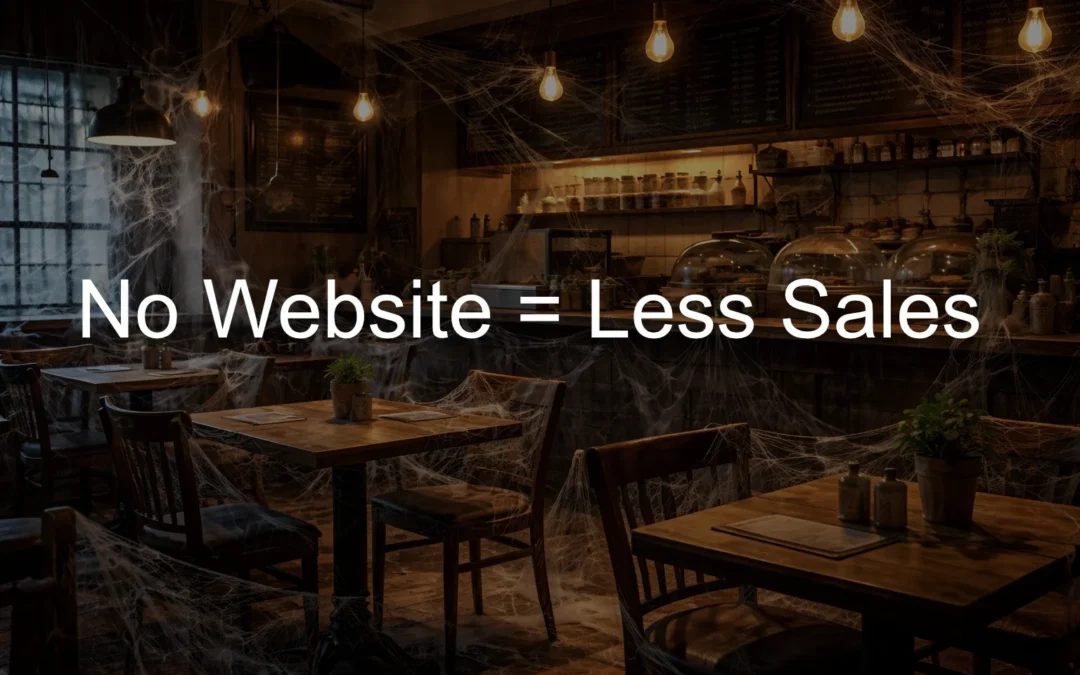
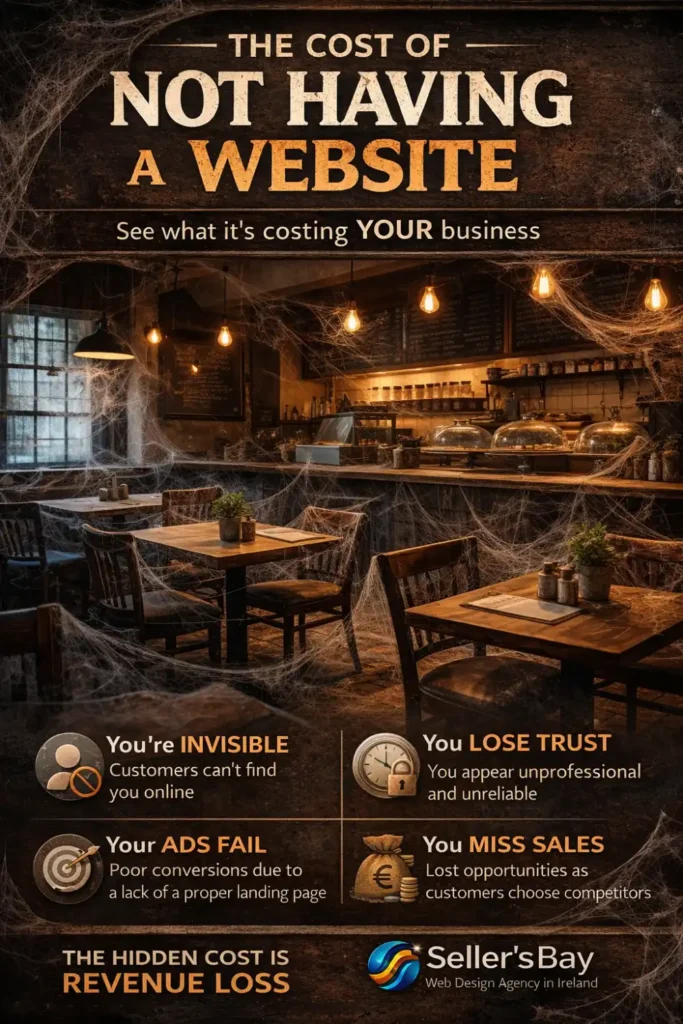
If you don’t have a website, you’re invisible at the exact moment someone is ready to spend money.
1. You’re Missing Out on Local Google Searches in Ireland
Many customers in your local area will first search locally to find the best match for their needs. For example, if you are looking for a plumber near you, it’s unlikely you would walk or drive around trying to find one.
Word of mouth is great for getting new business, but it’s only a small fraction of the business available to you. Tapping into online traffic from Google, Facebook, and other sources greatly increases your leads and sales. You need a website that is relevant, trustworthy, and effective at converting visitors into paying customers.
You have nowhere to send ad traffic, so you can’t run online ads effectively
You can’t build online reviews that are tied directly to your business, instead of an online marketplace
And once competitors secure those rankings, it becomes significantly harder (and more expensive) to catch up.
The longer you wait, the stronger they get.
2. You Instantly Lose Trust and Credibility
Online customers are becoming increasingly curious and require trust signals and credibility to make a final decision. If your business has a solid website and lots of business profiles linking to it from social media, directories, review sites, and more. This builds trust in your website, which in turn becomes a valuable asset to your business and grows in value over time. The more authority your website has, the easier it is to rank for valuable keywords in your industry. This, in turn, increases traffic, sales, and leads for your business.
Irish consumers are cautious buyers.
Before calling, they typically want to see:
What services do you offer
Photos of your work
Testimonials
Reviews
Clear contact details
A professional appearance
If they only find a basic Facebook page — or nothing at all — confidence drops immediately, and they might not find you at all.
It doesn’t matter how experienced you are.
A website signals:
Stability
Professionalism
Legitimacy
Long-term presence
And in competitive areas like Dublin, Cork, Galway, Limerick, and Waterford, perception matters more than ever.
3. The Hidden Revenue Loss Adds Up Quickly
Depending on what type of business you have and your average lead value, meaning how much you get over time from each lead, you could be losing a ton of money by not having a website. We are talking anywhere from a few hundred to much, much more.
Let’s look at this logically.
If your average job value is:
€500 for a trade service
€1,200 for a professional service
€2,000+ for specialist work
And you lose just 2 potential clients per month because someone chose a competitor with a stronger online presence…
That could mean:
€1,000 – €4,000 per month €12,000 – €48,000 per year
That’s the real cost of not having a website in Ireland.
And that loss compounds year after year.
4. You Pay More for Ads Without a Website
Having a website lets you create highly targeted, high-converting landing pages that you can then point your ads at. I’ve been running Google Ads for decades, and one of the most important factors that determines the quality of your ads is called “Quality Score.”
To obtain a high-quality score, you need a landing page that closely matches your ad’s content. Having your own website enables you or your marketing team to create highly specific landing pages for various campaigns, which in turn raises your quality score for the relevant keywords, increases your return on ad spend (ROAS), and brings you more traffic, sales, and leads for less money.
Some businesses try to rely on:
Facebook and Instagram
WhatsApp enquiries
Google Ads without landing pages
Marketplace listings
But here’s the issue:
Without a website:
You can’t build targeted landing pages
You can’t improve Google Ads Quality Score
You can’t retarget properly
You can’t track user behaviour effectively
You can’t optimise conversion rates
So you end up paying more per click and converting less.
A proper website reduces your cost per lead long term.
Without one, every enquiry costs more.
5. You Own Nothing Long-Term
I’ve had clients who run businesses solely on platforms like Etsy, eBay, and Amazon, and I highly recommend adding them as channels. However, the most successful clients always had a supporting website. The platforms I mentioned restrict what you can sell, require you to own your customers’ information, and will not grow your business much outside their platforms. You also cannot sell an Etsy or eBay business, or hand it down to a family member. Keep that in mind, as you might one day want to sell your business.
Social media and eCommerce platforms are rented space.
Algorithms change.
Social media is a rented space.
Accounts get restricted.
Reach drops.
Algorithms change.
Your website, however:
Is your digital asset
Builds authority over time
Can rank organically for years
Works 24/7
Increases business valuation
It becomes digital real estate.
Businesses without a website are building on land they don’t own.
6. Irish Consumers Expect It Now
Ten years ago, some small businesses could get away without a website.
In 2026, Ireland?
Customers expect:
A professional website
Mobile-friendly design
Clear service information
Fast loading speed
Easy contact options
Even sole traders are expected to have a proper online presence.
It’s no longer a luxury. It’s infrastructure.
7. You Miss Higher-Value Clients
Higher-value clients:
Research more
Compare options
Evaluate professionalism
Expect clarity
If you don’t have a website, you often don’t even make their shortlist.
And these are usually the clients who:
Spend more
Refer others
Return for repeat work
A website doesn’t just bring more enquiries.
It brings better enquiries.
How Much Does Not Having a Website Cost an Irish Business?
It’s not always clear how much your business is losing, but one thing is certain: it’s losing money it could have avoided with a website. In the past 27 years of providing web design and online marketing to clients worldwide, I’ve seen clients spend 10’s of thousands on marketing but target their Facebook page or other advertising. But this does not build your business; it only temporarily gains traffic. Building your site’s strength should be the most important part of your business model, as it will become a true part of your business. For example, let’s say you have an eBay shop that isn’t yours to sell, but a website is. It’s the same for Etsy stores.
There’s no balance sheet that says:
“Lost revenue due to weak online presence.”
But the cost shows up in:
Fewer calls
Lower conversion rates
Reduced trust
Higher ad spend
Missed long-term growth
The reality is simple:
Not having a website in Ireland in 2026 is not a cost-saving strategy.
It’s a revenue leak.
Final Thoughts: It’s Not About Cost — It’s About Control
“How much control do I want over my business growth?”
A website allows you to:
Control your messaging
Rank in Google
Capture enquiries 24/7
Build authority
Strengthen referrals
Lower advertising costs
Increase long-term stability
Without one, you’re relying entirely on luck, referrals, and rented platforms.
That’s risky in a competitive Irish market.
A Quiet Word to Irish Business Owners
If you’re serious about long-term growth — especially in competitive counties like Dublin, Cork, Wexford, or Waterford — your website isn’t an expense.
It’s infrastructure.
And when built correctly, it becomes one of the highest-return investments your business will make.
At Seller’s Bay Ireland, we work with Irish businesses that want more than just a “nice-looking site.” The focus is always on: